~ Bird Feeders for the Outdoor Bird Lovers ~
Here is some basic info you need to read in order to understand how these feeders work.
Bird Feeders Page
Number of feeding ports - 24 / BLACK SPRUCE, 24/ BLACK BOAT, 24/BLACK CANOE-Covered by US Utility Patent 6,679,197
A relatively complete list of which birds will directly or indirectly benefit from the use these feeders.
NOTE: Not all of the listed birds are in all States.
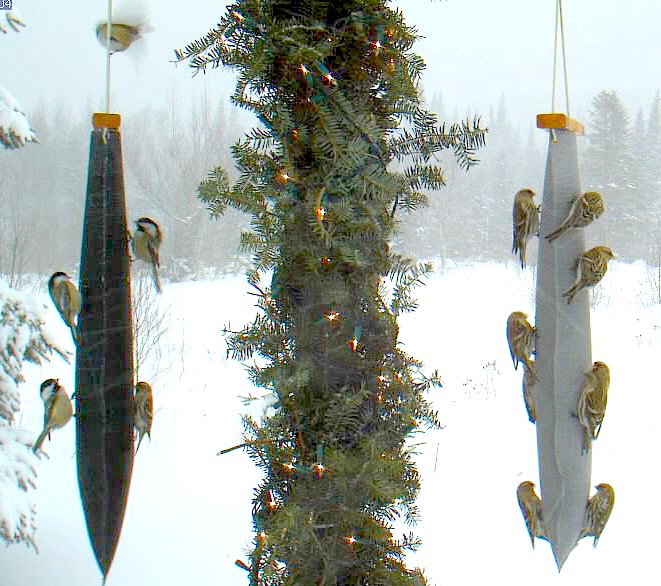
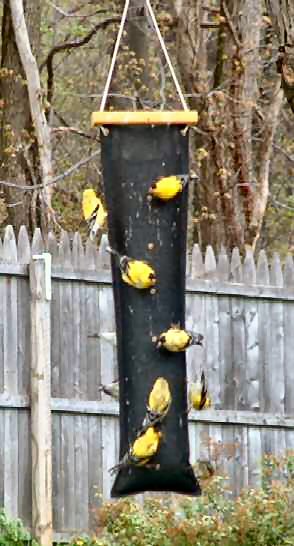
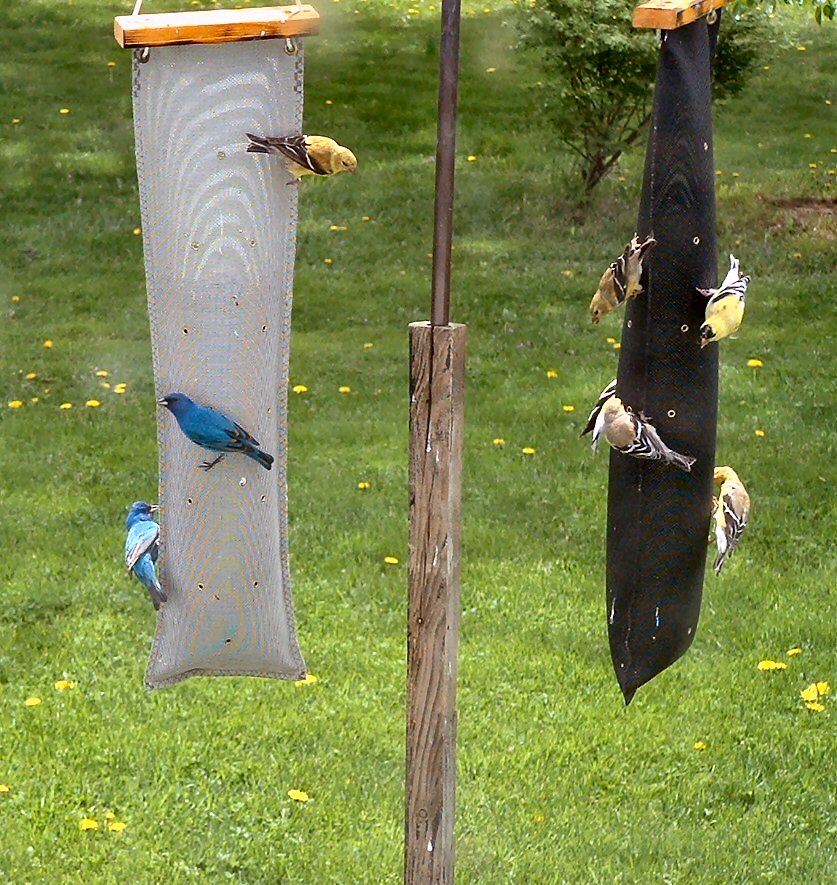
The following birds will directly use this feeder: American Goldfinch,
Lesser Goldfinch, Pine Siskin, Indigo Bunting, Redpoll, House Finch, Purple finch, Fox Sparrow and Junco.
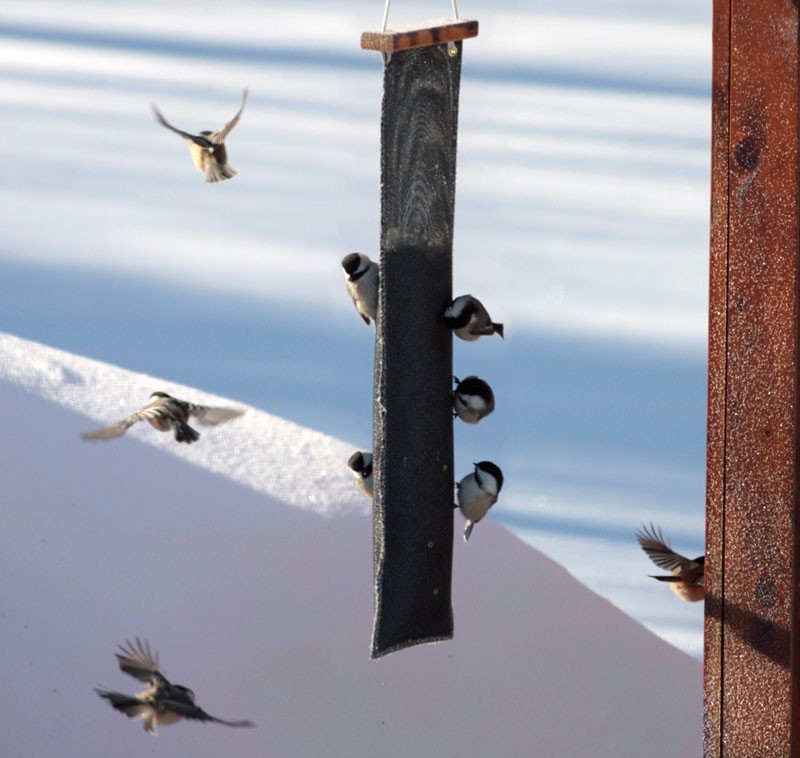
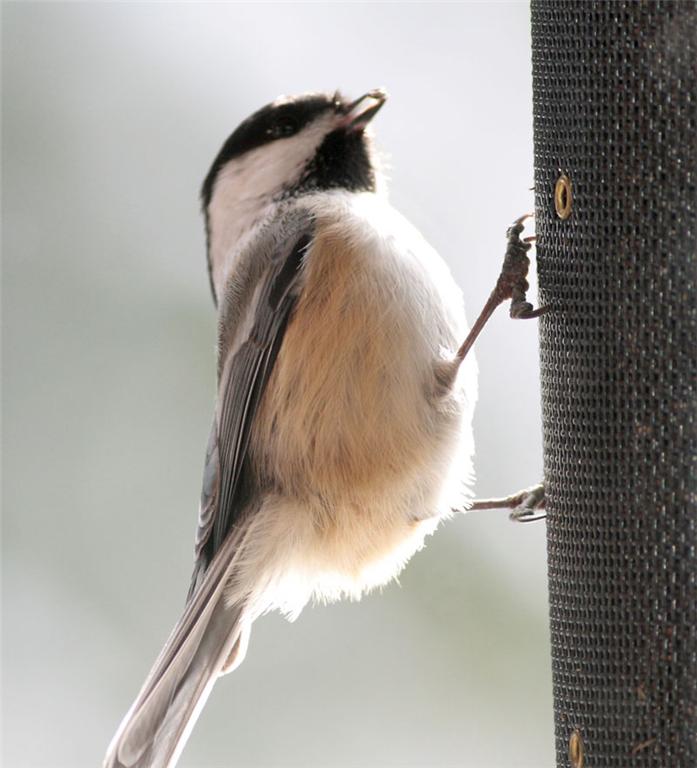
***Eurasian Goldfinch, Lawrences Goldfinch, *Black Cap Chickadee, *Carolina & Mountain Chickadee, *Tufted Titmouse.
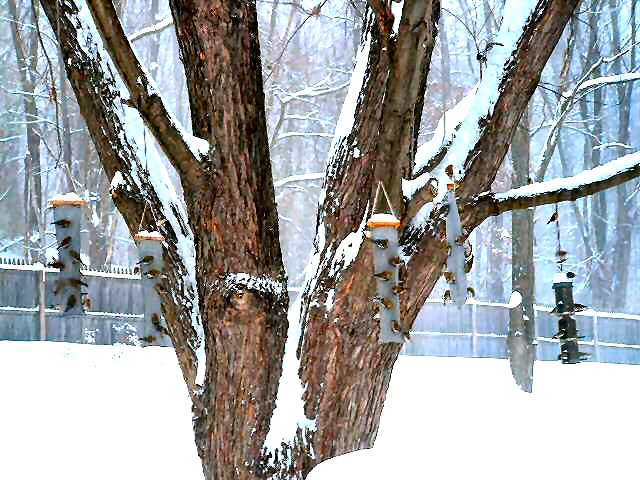
Birds that will frequent the ground below the feeder: Morning Dove, Cardinal, Chipping Sparrow, FOX SPARROW (best bird for aerating the shells beneath the feeders) and White Throated Sparrow. Junco will use the feeder but prefer feeding close to or on the ground. Why will there be birds feeding beneath the feeder? There are always tidbits and pieces of the heart that remains in the shell. With thistle there is much less, but enough to still be attractive.
*Will do so much more frequently if no sunflower is offered at the feeding station. Chickadee will remain for longer periods of time, and will not just grab a seed and fly away.
***The Eurasian Goldfinch is a non-native species and since their release on Long Island, N.Y. in 1970; has managed to establish a population that is spreading across the US. It is also called the European Goldfinch.
Approximate dimensions (empty) are 6" X 24". Slightly longer than a standard tubular feeders. The width dimension when filled (center) is about 4 1/2", and forms a mild hourglass shape. Hanging height of the feeder, may be increased by up to 6", with a simple adjustment for easier positioning.
Feeding ports will not enlarge with use by birds, in a few months or years. The feeder itself will retain its color, and will not permanently stain, and will out last the hanger system. (easily replaceable part)
Still capable of feeding 16 birds when half full, which is when you should top it off. Economical use. Increased efficiency increases economy. All models operate on pennies a day. Average use of a 24-port feeder (150 lb) over a period of a year .24 to .25 cents a day, at a seed cost of .60 cents a lb.
The large surface area that the feeder itself provides is 2 sq. feet, and in addition the edges of the feeder itself form two 24 inch TRUE perches, they are just not the customary round perches. The perching area provided by feeder itself, is like suspending two square feet of ground area, in the air and turning it into a feeder.
The feeder reduces aggression and competitive feeding by providing numerous feeding ports, and the area for their use. Feeding birds becomes more entertaining with the different patterns they can create as they use the feeder.
Quick run down
It will not rust, crack, or rot. There is no condensation built up inside the feeder to degrade the seed, and when it rains the superior ventilation dries the contents quickly. There are no nooks or crannies that are not well ventilated or exposed to sunlight. They open instantly for filling and close just as fast. The area for adding seed is of sufficient size and provides an elliptical opening, allowing for easy filling.
Seed consumption will generally average 150 lbs or less of seed usage over the period of a year for this feeder. It would break every rule in the book, if there was such a book, there is nothing like and there is nothing that works like it. They display a single bird as well as many. From quantity of birds, safety, ease of use, efficiency, accessibility, acceptance, display, maintenance, economical use, versatility, material and construction all been taken into consideration to produce a performance bird feeder. It is so different it was rapidly awarded a US Utility Patent.
These feeders are meant for small flocking birds attracted to thistle seed, which from a nutritional standpoint is superior to all other offerings and actually the least expensive (see below) seed you can provide for birds.
Please remember these feeders have an actual front and back plus two sides. The information provided on this listing is the result of 2 1/2 years of extensive testing "before" offering these feeders for sale. These feeders build their own audience of birds, so the number of birds you attract will increase, while your effort will decrease.
Squirrels (flying included) DO NOT LIKE AND WILL NOT EAT THISTLE. If the only seed you were to offer was thistle, the squirrels, raccoons, etc. frequenting your feeding area would leave. It is not a native see, flavor is objectionable, and the small size of the heart makes it physically impossible to be used as a food source. No germination of seed beneath the feeder (sterilized to kill weed seeds).
Bird Feeders Page
Finch Magnet Bird Feeder
More Pictures
Soy Tart Beads~
Enamel Kettles~
Candle Warmers ~
Primitive Decor ~
Wholesale Products ~
Bird Feeders
Soy Info Order Info
Welcome Page
~Home
~Link Resources
Website Design By Gone
Country Graphics
Content Copyright
Country Glow Soy Candles



